The evidence layer for AI apps and agents
Webcite reads documents, checks every claim against sources, and cites the exact evidence, in one API and MCP server for AI apps and agents.

Proof for every damn thing

Try a saved example
Real results recorded from the Webcite API. Running one uses no credits and needs no account.
Features
Built to verify, extract, and cite. So your AI apps and agents work with facts, not hallucinations.

Document extraction
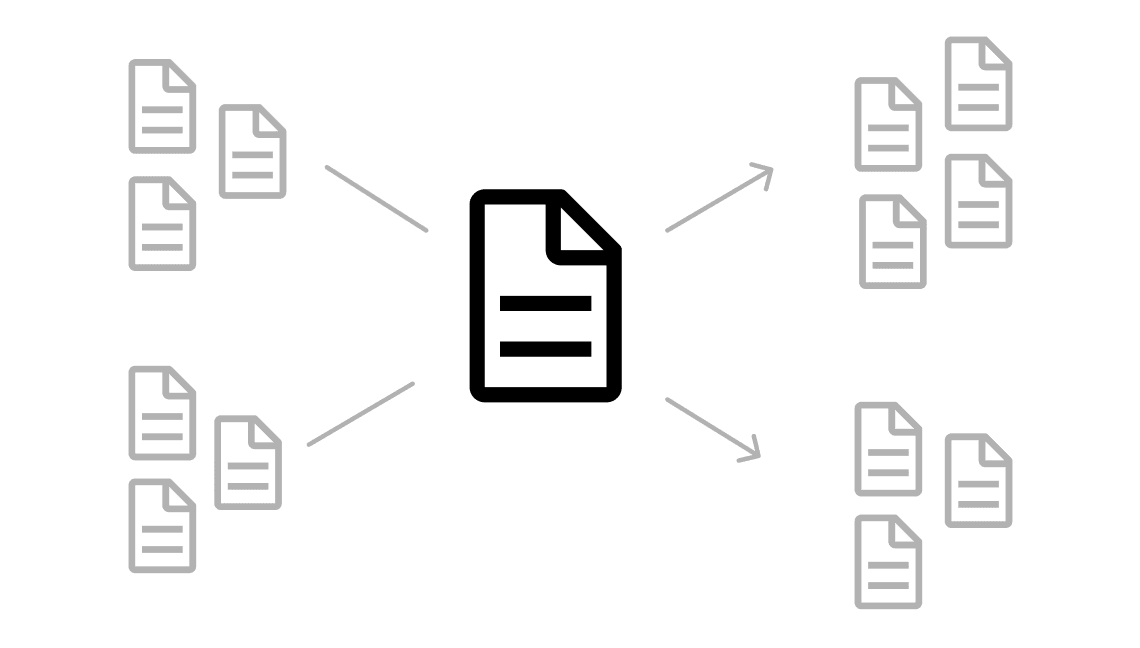
Turn PDFs, scans, slides and spreadsheets into Markdown, with tables, charts and form fields kept in place.

Claim verification
Check a claim against the web or your own files. Each source returns its passage, its stance and a verdict.
Citation classification
Sort every citation by source type: journals, news, government records, industry reports. Know where each fact comes from.
Source Integrity
Evidence Strength

96%
Fact Consistency
Domain Credibility
Credibility scoring
Score how much each source can be trusted before your team or AI agent acts on it.
Bring your own data
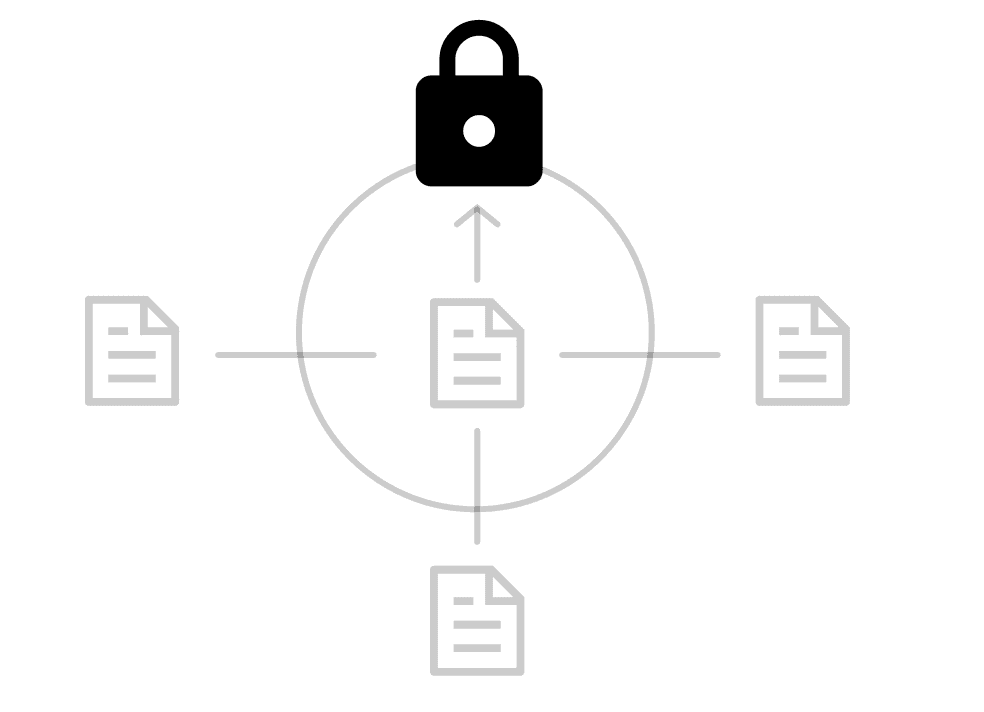
Upload your own data. Internal reports, knowledge bases, business docs. Your files are stored encrypted at rest and indexed for your team only.

Security and privacy
Requests travel over HTTPS and API keys are stored hashed. Verification records are kept in your account so you can retrieve them, as the privacy policy describes.
How it works
How we lock in credibility
Send a document or a claim
Upload a PDF, scan, slide deck or spreadsheet, or post a claim as text. One API key covers both.
Read every page
Each page comes back as Markdown with its tables, charts and form fields, and every element keeps its place on the page.
Check claims against sources
Each claim is checked against web sources or your own files, and every source is marked as supporting or contradicting it. In a saved run, the claim "The Great Wall of China is visible from the Moon with the naked eye." came back contradicted with 6 sources, for 4 credits.
Deliver verifiable proof
You get back structured JSON with citations, source locations and a verdict. Plug it into your LangChain agent, research report, or any workflow that needs facts it can point to.

Pricing
Simple, transparent pricing
Start free, scale as you grow. All plans include full API access and our credit-based billing system.
How credits work
Each claim verification uses credits: 2 credits for citation search, +1 credit for stance analysis, +1 credit for verdict. Full verification = 4 credits. Save credits by skipping stance or verdict when you don't need them.
Document extraction is metered per page at cost. A standard page uses about 0.74 credits (about 3 US cents) and lite mode about 0.05 to 0.23 credits. Uploading is free, and spreadsheets, DOCX, PPTX, HTML and text files cost 0 credits. Full pricing
Free
$0
foreverFor individuals, analysts, and researchers exploring AI-powered fact-checking. Credits renew every 30 days while some remain; once they are used up, upgrade to continue.
Enough for 25 full verifications or about 135 standard extraction pages.
100 credits, renewing every 30 days while credits remain
Full verification (citation + stance + verdict)
Access to web sources
API and MCP server access
Email support
JSON responses
Builder
$20
/monthFor developers building AI apps and agents with citation verification.
Enough for 125 full verifications or about 675 standard extraction pages.
500 credits per month
Everything in Free
$0.04/credit for overages
Streaming SSE support
Enterprise
Custom
For organizations with high-volume verification, private deployment and compliance needs.
Starts at 2,500 full verifications or about 13,500 standard extraction pages.
10,000+ credits per month
Everything in Builder
Scoped with you:
Custom data integrations
Single sign-on, on request
Custom SLA
Dedicated account manager
FAQ
We're here to help
Webcite reads your documents, checks every claim against sources, and cites the exact evidence, in one API for AI apps and agents. It turns PDFs, scans, spreadsheets and slides into Markdown page by page, with layout elements and source locations. It verifies claims against web sources or your own files and returns citations, source stances and a verdict. It can also review every claim in a document and report what was covered, check figures and arithmetic, compare numbers across documents, and bind each answer to the exact quote, page or spreadsheet cell. Use it over REST, through the OpenAPI schema, or with the MCP server. Webcite (webcite.co) is not affiliated with WebCite, the web archiving service at webcitation.org.
In US cents, a standard page costs about 2.96¢ and a lite page 0.2¢ to 0.92¢, at $0.04 a credit. A page that cannot be read is not charged, and no page is charged more than 10 credits.
Each verification includes three components: 1. Citation Extraction - Find and extract relevant sources with credibility scores 2. Stance Analysis - Determine if sources support or contradict the claim 3. Verdict - Get an overall verification result (supported, contradicted, mixed, unverifiable) You can skip stance or verdict to save credits when you only need citation extraction.
Credits are consumed per operation: citation extraction costs 2 credits, stance analysis costs 1 credit, and verdict generation costs 1 credit. A full verification (all three) costs 4 credits total. You can save credits by skipping stance or verdict when you don't need them.
Yes. Add a verification step after your model generates output, and unsupported claims are flagged with their sources before the output is used. It works with any model that produces text, over the REST API or the MCP server. Typical uses: research that needs cited sources, due diligence, content pipelines that need fact-checked output, and compliance workflows.
Generate an API key from your dashboard and make REST calls to our endpoints. We support both synchronous responses and real-time streaming via Server-Sent Events (SSE) for live updates as citations are extracted. Check our API docs for code examples in JavaScript, Python, and cURL. Most developers integrate Webcite as a verification step in their AI agent or research pipeline.
On the Free plan, credits renew every 30 days while you still have credits left. Once you use them all, you need to upgrade to a paid plan to continue. On the Builder plan ($20/month), you can continue using the API with usage-based billing at $0.04 per additional credit. Enterprise plans include custom allocations for high-volume research and compliance workflows.
Enterprise includes 10,000+ credits/month and everything in Builder. Custom data integrations, a custom SLA and a dedicated account manager are scoped with you, and single sign-on is arranged on request. Webcite can also run self-managed in your own cloud tenant; see webcite.co/enterprise.
Requests to Webcite travel over HTTPS, and API keys are stored hashed. Verification records are kept in your account so you can list and retrieve them through the API. The privacy policy describes what we collect and how to ask for deletion.
Articles
