Agentic AI is no longer experimental - it is a core part of the 2026 enterprise toolkit. But with autonomous AI systems making decisions and generating content at scale, compliance has become the primary concern for enterprise adoption. According to KPMG’s AI Pulse Report, 2026, 75% of leaders now prioritize security, compliance, and auditability as the most critical requirements for agent deployment. This article explains how verification layers and citation APIs address these requirements.
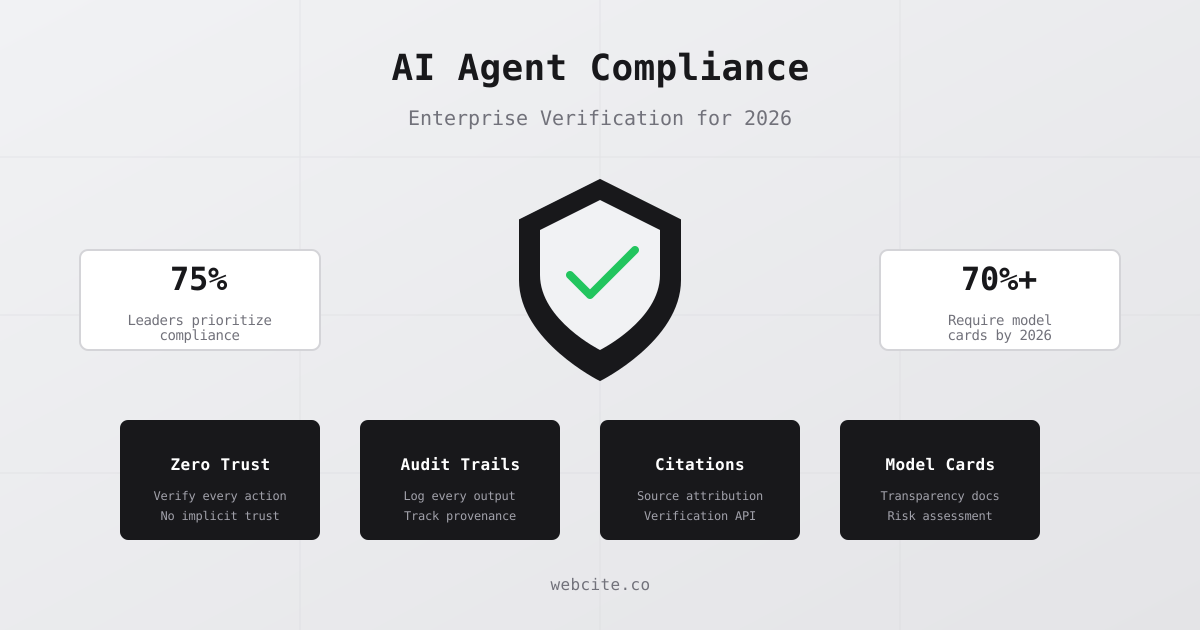
- 75% of enterprise leaders prioritize compliance and auditability.
- 70%+ of companies will require model cards from vendors by 2026.
- Zero Trust now applies to AI agents.
- Citation APIs create audit trails that satisfy compliance requirements.
The Compliance Imperative for Agentic AI
The shift from AI assistants to AI agents changes the compliance calculus entirely. Assistants suggest; agents act. When an AI agent generates a report, sends a communication, or makes a recommendation that influences business decisions, the organization is accountable for that output.
According to CaseIQ, 2026, AI in compliance is no longer optional - it is foundational. Enterprises face three categories of risk:
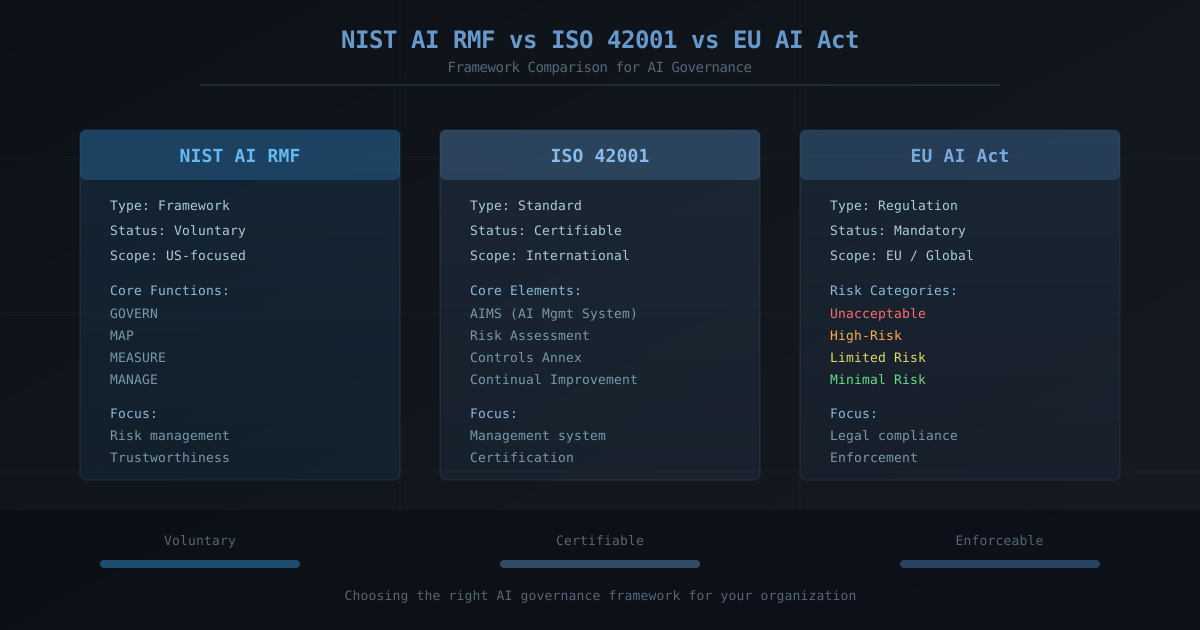
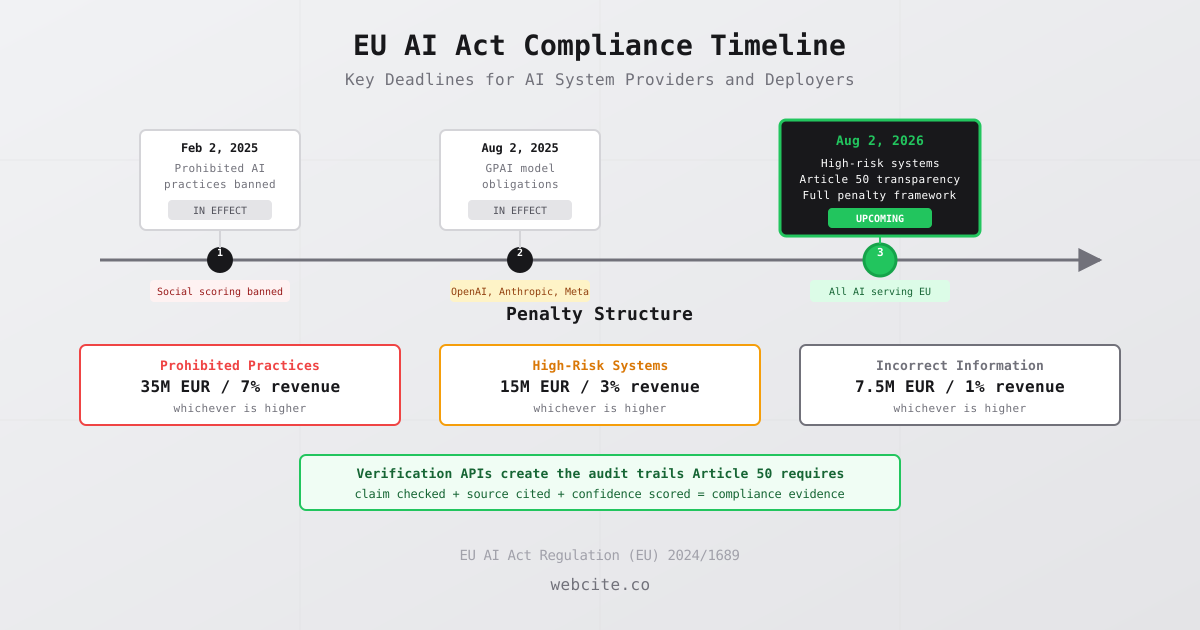
Regulatory Risk: Emerging AI regulations require transparency, explainability, and human oversight. The EU AI Act, NIST AI RMF, and sector-specific rules (healthcare, finance, legal) impose documentation and audit requirements.
Legal Risk: AI-generated content that contains false claims can expose organizations to defamation, fraud, or negligence liability. Without verification, companies cannot defend their AI outputs in legal proceedings.
Reputational Risk: Users who discover AI hallucinations lose trust. For enterprises where credibility is a competitive advantage, unverified AI outputs are an existential threat.
The compliance imperative is not about slowing down AI adoption - it is about making adoption sustainable and defensible.
Model Cards and Transparency Requirements
One of the most significant shifts in enterprise AI procurement is the demand for model cards. According to Gartner, 2026, more than 70% of companies will require vendors to hand over model cards before procurement.
Model cards are transparency sheets that function like nutrition labels for AI systems. They document:
- Model capabilities and limitations
- Training data sources and potential biases
- Intended use cases and out-of-scope applications
- Performance metrics across different populations
- Known failure modes and edge cases
For enterprises evaluating AI tools, model cards enable informed risk assessment. For vendors, providing comprehensive model cards is becoming a competitive requirement.
But model cards describe the model - they do not verify individual outputs. This is where runtime verification becomes essential. A model card might indicate that the system hallucinates 10% of the time on average. Verification APIs tell you whether this specific output is hallucinated.
Zero Trust for AI Agents
In the past, once a system was deployed internally, it was trusted. In 2026, according to Avion Technology, 2026, enterprise systems operate on a Zero Trust model. Every interaction - whether by a human or an AI agent - is verified.
Zero Trust for AI agents means:
Output Verification: Every claim generated by an AI agent should be checked against trusted sources before being served to users or acted upon.
Action Authorization: Agents should not have blanket permissions. Each action category requires explicit authorization, with sensitive operations requiring human approval.
Audit Logging: Every agent decision, every output, and every data access should be logged with timestamps and provenance information.
Source Attribution: When an agent makes a factual claim, it should cite the source. Unattributable claims should be flagged or filtered.
GitHub’s recent launch of Enterprise AI Controls, 2026 reflects this shift. The new agent control plane allows enterprises to programmatically apply enterprise-wide custom agent definitions for greater control and compliance.
The era of deploying AI agents without governance infrastructure is over.
Building Compliance-Ready AI Systems
Compliance is not a feature you add at the end - it is an architectural decision. According to WeBuild-AI, 2026, enterprise AI governance extends far beyond ticking regulatory boxes. It encompasses the entire AI lifecycle, from data provenance and model development to deployment monitoring and incident response.
A compliance-ready AI system includes:
Verification Layer: Before outputs reach users, they pass through a verification service that checks factual claims against authoritative sources. Citation APIs like Webcite provide this capability, returning citations and confidence scores that can be logged for audit purposes.
Audit Trail: Every verification result is logged with the original claim, the sources checked, the verdict, and the timestamp. This creates a defensible record for compliance reviews.
Human-in-the-Loop: For high-stakes decisions, the system routes to human reviewers. The agent recommends; the human approves.
Confidence Thresholds: Claims below a confidence threshold are either filtered, flagged for review, or presented with explicit uncertainty indicators.
Version Control: Model versions, prompt templates, and system configurations are versioned and logged. If an issue arises, you can trace back to the exact configuration that produced the output.
Webcite’s verification API fits into this architecture as the verification layer. Each API call returns structured data including the claim, supporting citations, stance analysis, and a verification verdict - all of which can be logged for compliance documentation.
Cluster Association and Compliance Signals
Enterprise AI systems do not operate in isolation. According to Google’s ranking documentation, 2024, sites and services are grouped into clusters, and the quality signals of the cluster affect individual members.
For AI compliance, this has practical implications:
Vendor Cluster: If your AI vendor is associated with tools that have compliance problems, that association affects your risk profile. Due diligence on vendors should include their compliance track record and the compliance posture of their other customers.
Data Source Cluster: The sources your AI system cites affect its credibility. Citing authoritative sources (government records, peer-reviewed journals, established news organizations) positions your outputs in a higher-trust cluster than citing anonymous blogs or content farms.
Use Case Cluster: How you deploy AI affects regulatory scrutiny. AI used for healthcare decisions is in a different compliance cluster than AI used for marketing copy. The requirements differ accordingly.
Building a compliance-ready system means being intentional about cluster association - choosing vendors, data sources, and use cases that position the organization for sustainable compliance.
Compliance Monitoring and Incident Response
Compliance is not a one-time certification. According to Sprinto, 2026, leading compliance platforms automate vendor assessments, map compliance requirements, and summarize audit findings using AI.
For AI agent deployments, ongoing monitoring should track:
Verification Rates: What percentage of agent outputs are successfully verified? Declining rates may indicate retrieval degradation or new query patterns.
Confidence Distributions: Are confidence scores stable? Shifts may indicate model drift or changes in source quality.
Incident Frequency: How often do verified outputs later prove incorrect? This measures the effectiveness of your verification layer.
Audit Coverage: What percentage of agent actions have complete audit trails? Gaps represent compliance risk.
When incidents occur - and they will - the response process should include root cause analysis, affected output identification, user notification (where appropriate), and system remediation. The audit trail created by verification APIs enables this response by providing the evidence needed to understand what went wrong.
The Business Case for Compliance Infrastructure
Compliance infrastructure has costs: verification API usage, audit storage, human review time, and governance overhead. But these costs are justified by risk reduction.
According to KPMG’s AI Pulse Report, 2026, leading teams are embedding privacy by design and segmenting sensitive data to trace and remediate issues. This investment pays off in:
Faster Procurement: Enterprises with strong compliance postures clear vendor security reviews faster.
Reduced Liability: Verified, documented outputs are defensible. Unverified outputs are not.
User Trust: Users who see citations and confidence scores trust the system more and use it more.
Regulatory Readiness: When new regulations arrive - and they will - compliant systems adapt faster than systems built without governance.
Webcite’s pricing reflects this value proposition. The Free plan with 50 credits per month enables compliance testing. The Builder plan at $20/month with 500 credits supports production workloads. Enterprise plans with 10,000+ credits provide the scale needed for high-volume agent deployments.
The cost of verification is small compared to the cost of a compliance failure.
Frequently Asked Questions
Why is AI agent compliance critical in 2026?
75% of enterprise leaders now prioritize security, compliance, and auditability as the most critical requirements for AI agent deployment. Regulations are tightening, and companies face legal and reputational risks from unverified AI outputs.
What are model cards and why do they matter?
Model cards are transparency documents that describe an AI system’s capabilities, limitations, training data, and intended use. Gartner projects that by 2026, over 70% of companies will require vendors to provide model cards before procurement.
How does Zero Trust apply to AI agents?
Zero Trust for AI means every agent action is verified, regardless of whether the agent is internal or external. This includes validating outputs against trusted sources, maintaining audit trails, and requiring explicit authorization for sensitive operations.
Can Webcite help with AI compliance?
Yes. Webcite provides verifiable citations for AI-generated claims, creating audit trails that show exactly which sources support each statement. The Free plan includes 50 credits per month, and the Builder plan provides 500 credits at $20/month for production compliance workflows.
What should an AI audit trail include?
A complete audit trail includes the original AI output, each factual claim extracted, the sources checked for verification, the verification verdict and confidence score, timestamps, and the model version that generated the output.
How do I prepare for AI regulations?
Start by implementing verification and audit infrastructure now. Document your AI systems with model cards. Establish human-in-the-loop workflows for high-stakes decisions. Monitor compliance metrics continuously. This foundation makes regulatory adaptation faster when new requirements emerge.